SLAC National Accelerator Laboratory
SLAC Drupal User Guide
  • Get Started
    • 5 things to do to launch your site
    • Request a site
    • Log into site
    • Update site name
    • Managing access
    • Conference web support
  • Organize & Build
    • Introduction to SLAC Drupal Sites
    • Manage Site Content
    • Site Organization & Menus
      • Anchor links
      • Linking to interior pages
    • Building blocks
      • Content Types
      • Paragraph Types
    • Content Examples
      • Basic Page Example 1
      • Basic Page Example 2
      • Basic Page Example 3
    • Recommended Image Sizes
    • Protect webforms from spam
    • Securing webforms
    • Glossary
  • Events
  • Support
    • Training videos
    • FAQ
    • Release Notes
  • Policies & Guidelines

Breadcrumb

  1. Home
  2. Organize & Build
  3. Site Organization & Menus
  4. …
Facebook Share X Post LinkedIn Share Email Send
  • Introduction to SLAC Drupal Sites
  • Manage Site Content
  • Site Organization & Menus
    • Anchor links
    • Linking to interior pages
  • Building blocks
    • Content Types
    • Paragraph Types
  • Content Examples
    • Basic Page Example 1
    • Basic Page Example 2
    • Basic Page Example 3
  • Recommended Image Sizes
  • Protect webforms from spam
  • Securing webforms
  • Glossary

Linking to interior pages

Depending on what paragraph types you are editing, there are two ways to link to interior pages: 

  1. search by page name in the URL field
  2. input URL directly in URL field


Search by page name

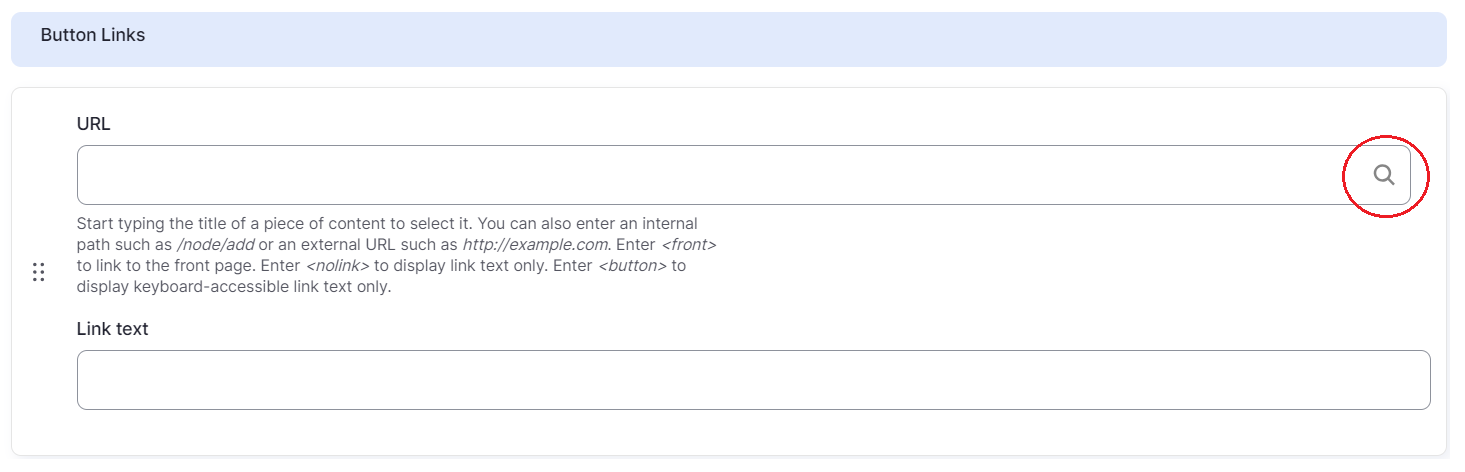
If the URL/Link field has a magnifier glass to the right, you can type the page title in the URL field, and select from the search results.  

For these types of links, you don't need to worry if the site name changes or if there is a site page restructuring since this link will continue working.
highlight of the search button for links

button link.png

August 28, 2023
highlight of the search button for links
Download
Number of Slides


Input the URL directly

If the URL/Link field does not have a magnifier glass to the right, you have to add the URL instead of just searching for the name of the page.

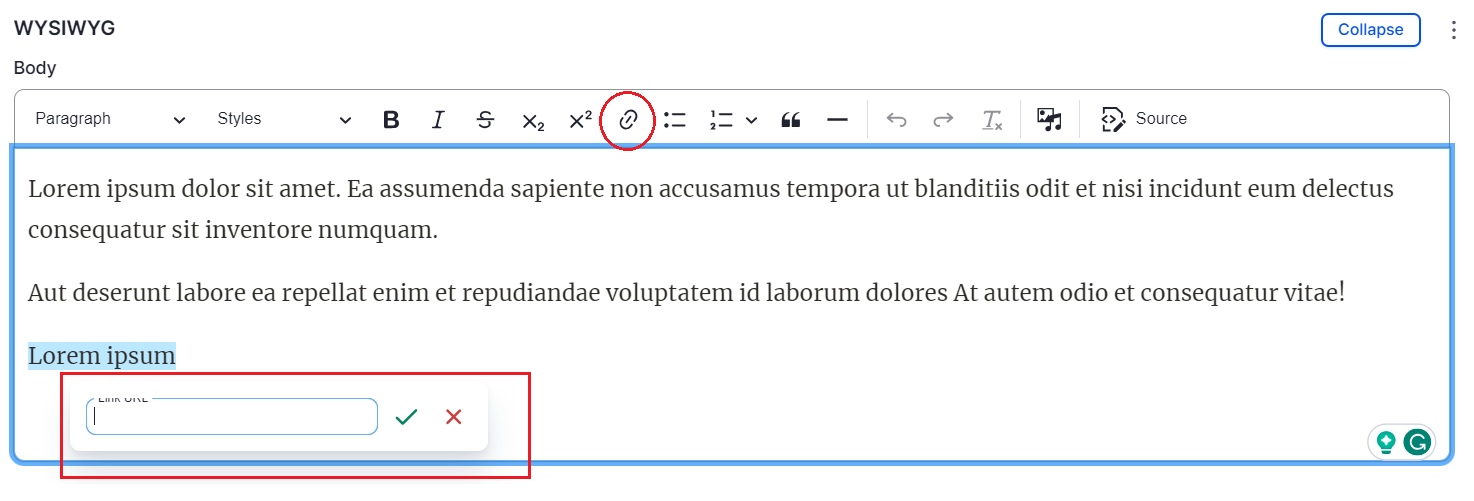
In the WYSIWYG paragraph type, select the text you want to link, and click the chain link icon on the top navigation bar. A new popup appears, where you have to type the URL directly. See below the options for absolute vs. relative URLs.
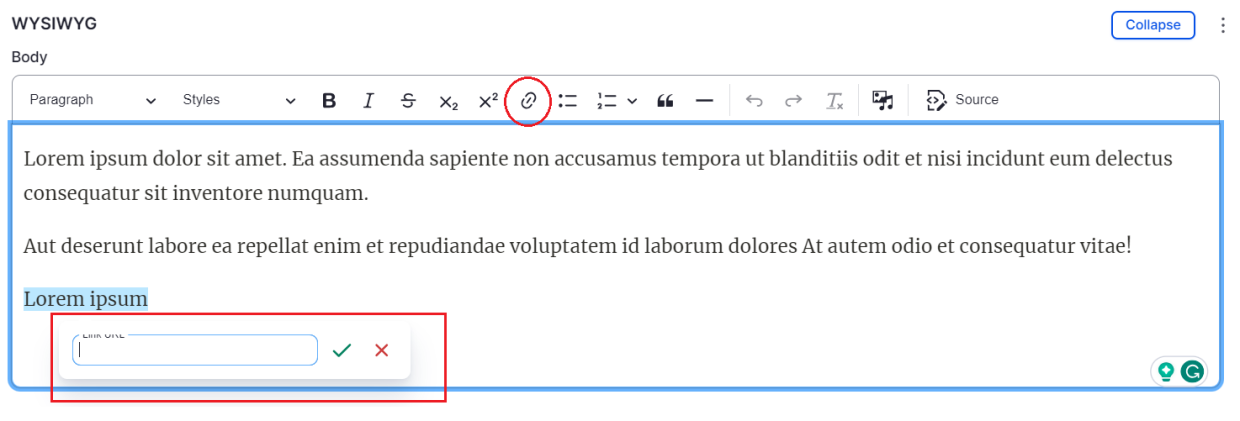
screenshot of the WYSIWYG screen, highlighting how to add links

WYSIWYG link.png

August 28, 2023
screenshot of the WYSIWYG screen, highlighting how to add links
Download
Number of Slides


Absolute vs. relative URLs

There are two ways to link to interior pages when inputting the URL directly into the URL field.  The first option works when the site URL is not going to change, and the other is when your site URL is temporary.


When to use an absolute URL?

An absolute URL contains the entire address from the protocol (HTTPS) to the domain name (www.drupalguide.com) and includes the location within your website in your folder system (/foldernameA) names within the URL.

You should use absolute URLs if your site URL is not going to change (i.e. if the URL of the site we provided starts with int.slac.stanford.edu or web.slac.stanford.edu)

Example of an absolute URL: 

https://drupalguide.slac.stanford.edu/policies-and-guidelines


When to use a relative URL?

A relative URL does not use the full web address and only contains the location following the domain. It assumes that the link you add is on the same site and is part of the same root domain.

Example of an relative URL:

 /policies-and-guidelines  


If your site URL is temporary and is using the Pantheon development URL  (i.e. http://live-slac-proton-d9.pantheonsite.io/ ) you should use relative URLs, since they will keep working when transitioning to the permanent SLAC URL.  


SLAC Drupal User Guide
2575 Sand Hill Road, Building 50
Menlo Park, CA 94025
  • Policies & Guidelines
    • Acceptable Use of IT Resources
    • SLAC Branding and Style Guide
  • SLAC IT
    • IT website
    • Get help
  • Facebook
  • Twitter
  • Instagram
  • Flickr
  • Youtube
  • LinkedIn
  • Staff portal
  • Privacy policy
  • Accessibility
  • Vulnerability disclosure
  • Website feedback
SLAC
  • SLAC home
  • Maps & directions
  • Emergency info
  • Careers

© 2025 SLAC National Accelerator Laboratory is operated by Stanford University for the U.S. Department of Energy Office of Science.

Stanford University U.S. Department of Energy
Top Top
Back to top Back to top